Sunday, August 30, 2009

St. Croix Garden Club

Calling Everyone with an Interest in Gardening
St. Croix Valley Garden Club
  • Meetings with speakers on topics of interest
  • Share knowledge and ideas with local gardeners
  • Work together on community projects
  • Start planning for your garden next year
Come to the first meeting of the St. Croix Valley Garden Club
Wednesday, September 23rd
7-9 PM Osceola Public Library


We’ll learn about community gardens and start planning for Club activities and fun. All gardeners and “gardener wanna-be’s”of any age are welcome. Come and see what we can do together!

For more information, call Verna at 294-4048 or email Kate Bergeron at dkbergeron@charter.net

Let’s start a Garden Club!

Thursday, August 27, 2009

Turban Squash Information (Winter Squash)


Tybel harvesting the winter squash


The squashes that we harvested this week are a variety of Turban squash that we chose because of their small size and excellent storage qualities. In a drier season, we would have left them on the vine longer, but due to the moisture in the gardens, we needed to harvest them before they started to spoil or before the squash borers got to them. Still, they are full size, ripe, and beautiful. Some of them you will start seeing in the boxes this next week, and some we will cure and store for later distribution.

Turban Squashes are a variety of winter squash, known for their hard shells which enable them to store longer than summer squashes. Their flesh is mildly sweet and they have seed-containing hollow inner cavities.

Health Benefits
Winter squashes are high in carotenes, and they are good sources of vitamins A, C, B1, B6, folic acid, pantothenic acid, potassium, niacin, iron, riboflavin, magnesium and dietary fiber. Carotenes are highly valued for their anti-carcinogenic properties.

Uses
  • To cook halved squash, pierce it in several locations with a fork to allow steam to escape and bake at 350 F until tender (30-90 minutes depending on size). It can be cooked dry, rubbed with butter or oil, or steamed with a little bit of water in the pan.
  • After cooking, it can be mashed and used in breads, cakes, muffins, scones, pies, etc.
  • Steamed...cube the squash and steam until tender. Dress it with melted butter or olive oil and your favorite seasonings.
  • Creamed in a soup.

Wednesday, August 26, 2009

Pickled Jerusalem Artichokes

Garden members Mike and Kerry said that a traditional way to enjoy Jerusalem Artichokes in their family was sweet and sour pickled. I found this recipe in a New York magazine, but there are many variations of it online. Give it a try!

ILENE ROSEN’S PICKLED JERUSALEM ARTICHOKES

Ingredients

1 pound Jerusalem artichokes
2 cups rice vinegar
11/2 cups white sugar
1 teaspoon salt
1/4 teaspoon freshly ground black pepper
1/2 teaspoon turmeric
1 large clove garlic, smashed
1/4 teaspoon cayenne powder

Procedure

Scrub unpeeled Jerusalem artichokes and (1) slice into pieces about 1/4-inch thick. Set aside. Combine the remaining ingredients in a small pot. (2) Bring to a boil over medium heat and stir.
(3) Pour hot liquid over Jerusalem artichokes in a nonreactive bowl. Allow to cool on counter. Refrigerate for at least 2 hours, ideally 24, and consume within a week.

Tuesday, August 25, 2009

Jerusalem Artichoke Information


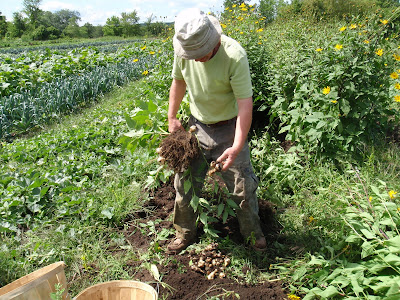
The Jerusalem Artichoke is neither from Jerusalem nor an artichoke. It is also known as Sunchoke, which describes it more accurately. It is the tuber, or underground stem, of a wild sunflower that is native to the U.S. The photos above show the bright yellow flowers and Roland harvesting the tubers within the root system. The root itself looks like a knobby potato and sort of resembles ginger.

Jerusalem Artichokes grew wild along the eastern seaboard from Canada to Georgia, and was cultivated by Native Americans. The Native Americans called it "sun root" and it most likely became known as Jerusalem Artichokes when it was introduced to Europe. Many sources say that the Jerusalem part of its name came from a confusing translation of the Italian word girasole which means sunflower. Apparently, it sounded like Jerusalem. It was described as an artichoke with hopes that the familiar name/flavor would enhance its acceptance.

Health Benefits
Jerusalem artichokes are an excellent source of inulin, a polysaccharide that is handled by the body differently from other sugars. It is extremely beneficial to diabetics for improving blood sugar control. Inulin also promotes the growth of bifidobacteria which are believed to help maintain a healthy balance of intestinal microflora. Therefore, Jerusalem artichokes can help relieve constipation. They do, however, sometimes cause flatulence for some people.

Storage
Store in a plastic bag in the refridgerator up to a week. To restore crispness, soak in ice-water.

Uses
Scrub the tubers thoroughly; a vegetable brush might be useful. They are edible raw or cooked, with skins or without. Once cut, the flesh will darken with exposure to air just like apples and potatoes will, so prepare them close to surving time or cut and immerse them in acidulated water (with a dash of lemon juice or vinegar). When cooking them, they can quickly change from a solid texture to mush, so monitor them closely. They can be served
  • raw in salads or or in a vegetable platter
  • roasted, boiled, steamed, fried, or stewed
  • mashed like potatoes
  • creamed in a soup
  • shredded and used in place of potatoes in potato pancakes

Roasted Jerusalem Artichokes

Yield: About 4 servings

Ingredients
1 pound Jerusalem Artichokes, sliced evenly
1-2 tablespoons olive oil
salt and pepper
a few sprigs of rosemary or thyme

Procedure
Preheat oven to 400 F. Toss artichokes with oil, sprinkle with salt, and add the herbs. Bake for 20-30 minutes in a shallow pan. They should be tender, but not mushy. Season with pepper.

Quick Boiled Jerusalem Artichokes

This is an easy recipe that allows the flavor of the Jerusalem Artichokes to prevail.

Ingredients
1 pound Jerusalem artichokes
1 teaspoon mild vinegar or lemon juice
1-3 tablespoons butter, melted
1 tablespoon chopped parsley
salt and pepper


Procedure
Boil enough water to cover the artichokes. Wash the artichokes thoroughly. Add the vinegar or lemon juice to the boiling water to prevent discoloration, then add the artichokes. Cook until tender, about 15 minutes, but check frequently to prevent overcooking. Drain and add butter, parsley, and salt and pepper to taste.

Roasted Jerusalem Artichoke and Carrot Soup

This recipe is adapted from the Asparagus to Zucchini Cookbook.

Ingredients
1 pound Jerusalem Artichokes, chopped
1-2 pounds carrots, chopped
1 large onion, chopped
2-3 tablespoons olive oil
2 tablespoons fresh thyme or rosemary
2 cups + vegetable or chicken stock
salt and pepper

Procedure
Preheat oven to 400 F. Roast vegetables in a shallow pan with oil, herbs, and a pinch of salt for 20-30 minutes or until they are thoroughly cooked. Allow the vegetables to cook, then place in blender with stock and blend until smooth. Add extra stock or water until a creamy soup consistency is obtained. Season to taste with salt and pepper.